Sour Mashed Sweet Potato
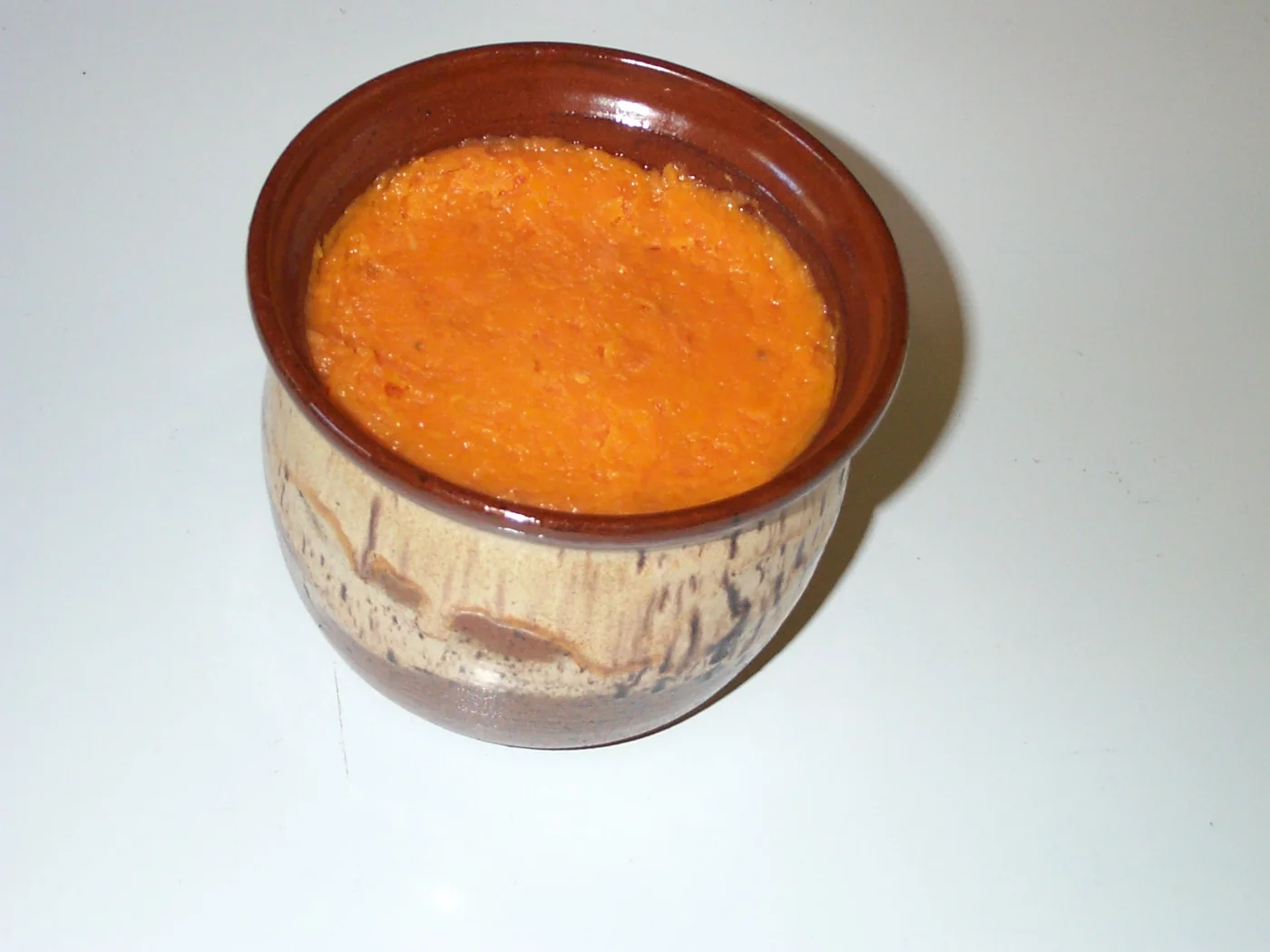
Fermentation Sour mashed sweet potato is a great way to make use of leftover roast vegetables. You can use this recipe for several roasted vegetables, including sweet potatoes, taro, and pumpkin. It makes for an excellent dip at parties, a very nice cold mash at picnics, a great accompaniment for sliced cold meats, and is also good when served with barbecued
Before you start
A quick setup makes the method easier to follow and keeps important steps from being missed.
Preparation checklist
- Read all 9 method steps from beginning to end.
- Measure and arrange all 4 listed ingredients.
- Set aside about 2880 minutes, based on the time recorded by the source.
Useful preparation guidance
Read the complete method before starting so ingredients and equipment are ready when needed.
Measure and prepare every ingredient before applying heat or beginning time-sensitive steps.
Use the method's visual and texture cues, because cookware and heat levels can vary between kitchens.
General kitchen guidance; no recipe-specific claim has been added.Method
- 01
Peel and roast the sweet potato or other vegetables. Ideally, this would be an extra piece of sweet potato, pumpkin, taro, etc. tossed into the oven with other food being roasted for a main meal. A 500 g piece of sweet potato will roast nicely in 1½ hours at 150°C (300°F), or less at a higher temperature.
- 02
Allow the vegetables to cool to about room temperature.
- 03
Mash the vegetables in a bowl. Try to break up all large pieces, but don't be too fussy—a few little lumps won't bother anyone!
- 04
Peel the ginger, and mash it in a mortar and pestle or mince it in a food processor. Add it to the bowl and mix well.
- 05
Add the salt and kefir or yoghurt, and mix in well. Try to get a smooth consistency, but don't be too concerned about the odd lump.
- 06
Pack the mash into a crock or jar, where it can ferment. Pick a nice looking one that you can serve it from later also. Smooth the top of the mash with a spatula.
- 07
Fill a strong plastic bag with water, seal (knot or zip-lock) and place on top of the mash. Because the plastic bag is flexible, it will fit to the surface of the mash and exclude air, which prevents mould.
- 08
Set aside in a warm (not hot!) place for 48 hours to ferment.
- 09
After fermenting, remove the plastic bag and close the crock or jar with a lid, then place in a refrigerator to keep fresh.
Ready to serve
Serve the dish as directed and enjoy it while it is at its best.
Bon appétit — enjoy your meal!Source & licence
This recipe was adapted and reformatted from Wikibooks Cookbook . Text: CC BY-SA 4.0. Image: Public domain, credited to Webaware; view original image record .
More from International
 International
"Favourite" salad
How to prepare "Favorite Salad": Bread, Mayonnaise, Garlic and Carrots. Step-by-step recipe with a photo, 18 stages, the total time is 30 minutes.
 International
"Gelak Pilaw," pilaf with meatballs
Learn how to make "Gelak Pilaw," pilaf with meatballs with 7 ingredients and 11 clear steps.
 International
"Grace" salad
Learn how to make "Grace" salad with 7 ingredients and 8 clear steps.
 International
“Original” pork salad with kiwi and eggs
How to prepare “Original” pork salad with kiwi and eggs: Lettuce leaf, Pork in / k, Kiwi and Eggs (quail or chicken C2-C3) - 6 pieces.